

Reflections on Integration, Therapy, and Meaningful Change
Thoughtful writing exploring nervous system healing, somatic integration, expanded states, and the deeper process of transformation.
Featured Resources
New to Psychedelic Integration or Medically Supported KAP?
Here are some resources you can download:
A Beginner's Guide to Psychedelic Therapy
How to Prepare for Ketamine-Assisted Psychotherapy
Set, Setting, and Intention: A Guide to Meaningful Inner Work

Ketamine-Assisted Psychotherapy for Trauma: What the Research Shows
You can understand exactly what happened to you and still go into freeze when someone raises their voice. A Pasadena therapist on why trauma resists ordinary therapy, what the research on ketamine-assisted psychotherapy really shows, and why the structure around the medicine matters more than the medicine.
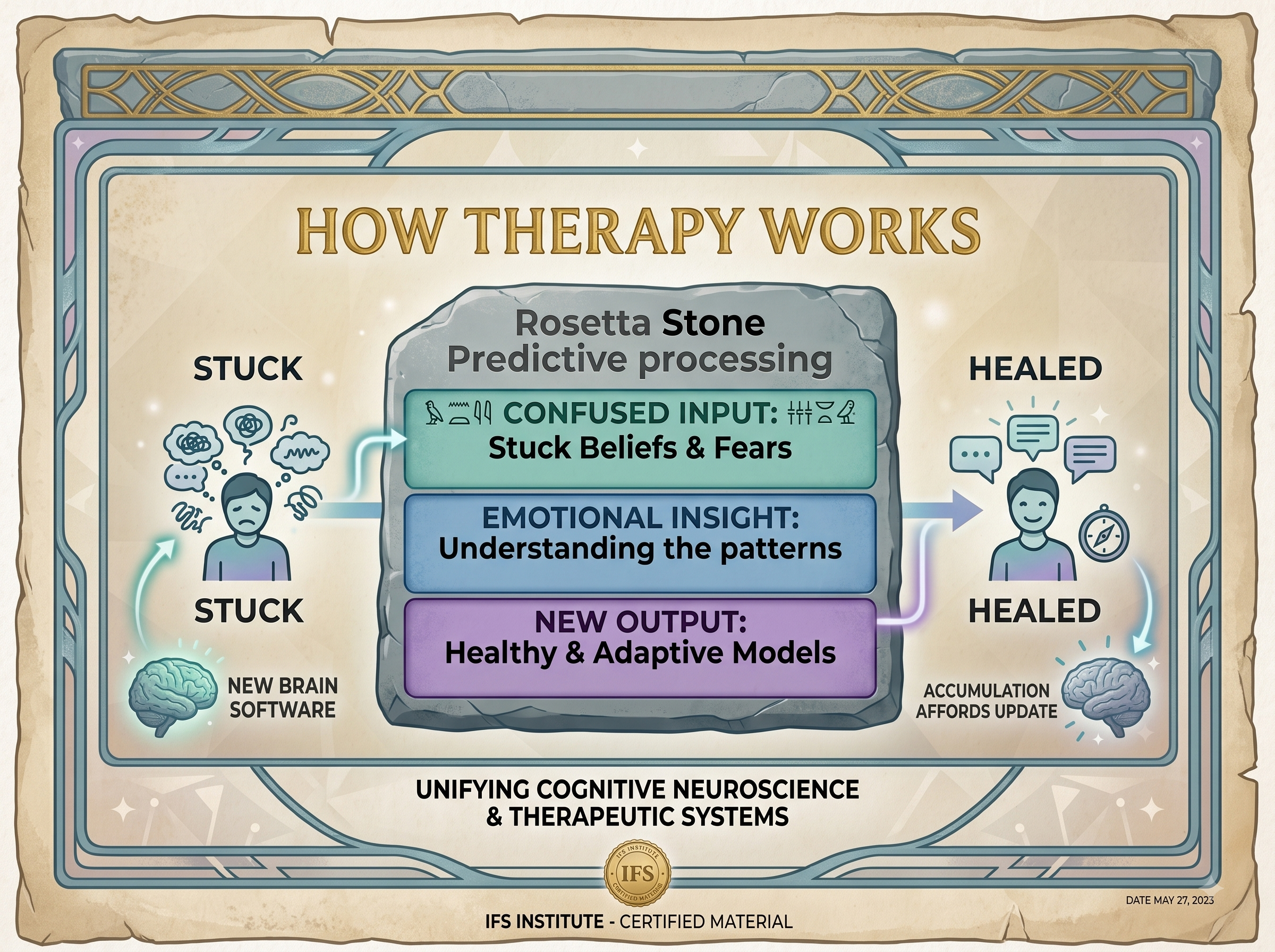
Why Does Therapy Actually Work? A New Answer From Neuroscience
CBT, EMDR, IFS, psychodynamic, somatic. Each comes with its own theory of what's wrong with you, and in head-to-head comparisons they mostly perform about the same. A Pasadena therapist on what cognitive neuroscience suggests is really going on, why the relationship does half the work, and why change is slow.
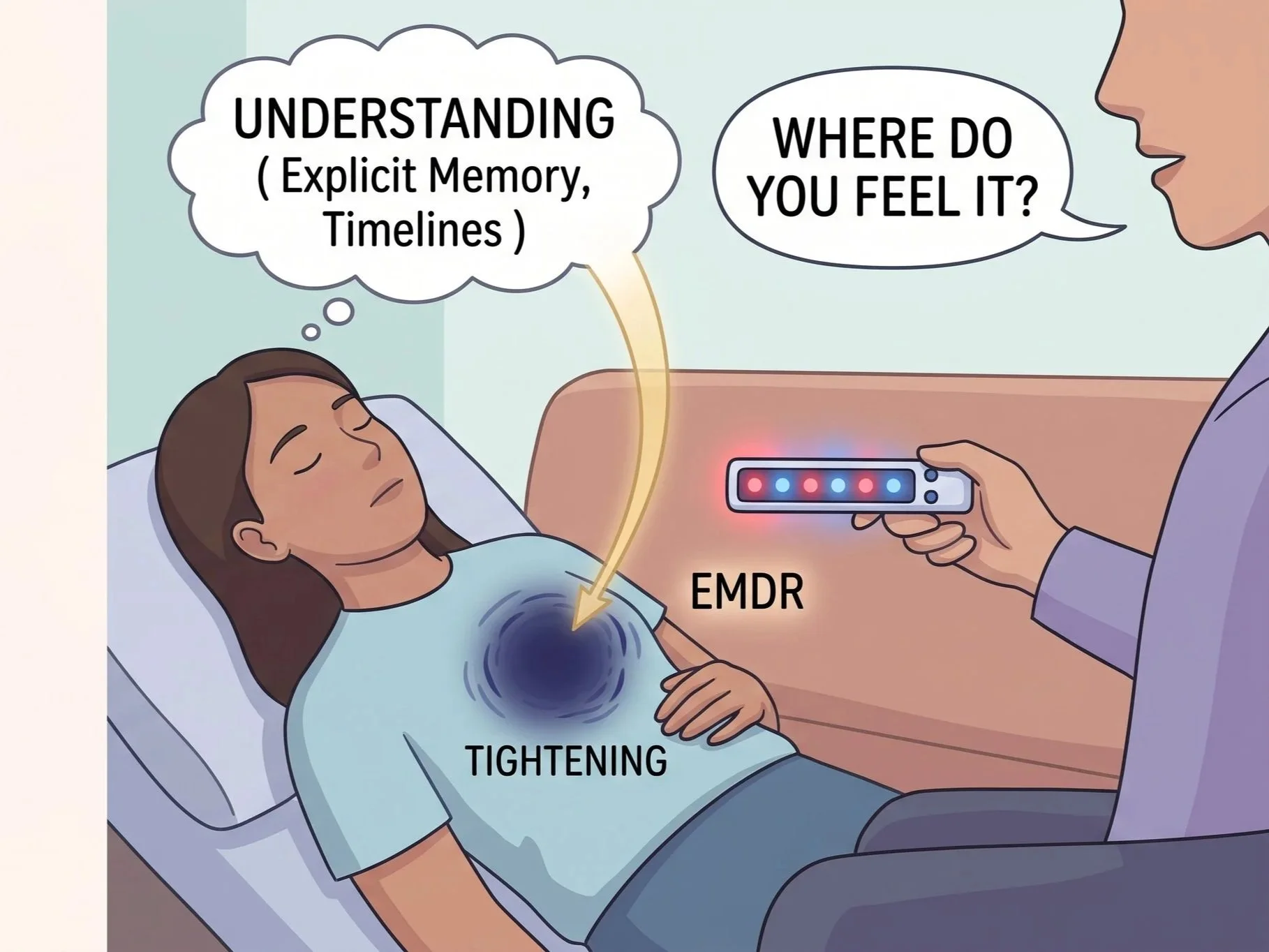
Why Talking About It Hasn't Been Enough
You've told the story. You understand the pattern. And you still go quiet when someone gets close. That's not a failure of effort. It's a mismatch between where the problem lives and where the work was aimed.

Psycholytic vs. Psychedelic Ketamine Therapy: What's the Difference?
Some providers describe being awake and talking throughout. Others describe eye masks, music, and profound inward experiences. They aren't describing the same thing in different words. A Pasadena therapist on the two approaches to ketamine-assisted therapy, why the route of administration matters, and how to work out which one you're actually looking for.

Why Your Body Won't Stop Bracing, Even When You Know You're Safe
Knowing you're stressed isn't the same as helping your body get out of the stress response — they live in different parts of your system. A therapist on what's actually happening physiologically, why the usual fixes often don't reach far enough, and what genuinely helps a chronically activated nervous system learn to settle.

How Low-Dose Ketamine May Deepen EMDR Therapy
When a traumatic memory is recalled it briefly becomes editable, and both EMDR and low-dose ketamine work with this window in different ways: EMDR reprocesses the memory while ketamine opens a period of heightened neuroplasticity, quiets the brain's self-critical loop, and widens the window of tolerance. A Pasadena therapist explains how the combination works, why the timing and the low dose matter, and what the early research does and doesn't yet show.

EMDR, Explained: What It Is and What Actually Happens in a Session
EMDR is a structured therapy for experiences your nervous system never finished processing. You don't have to narrate the whole story out loud. You don't lose control or go under. What you do is hold a piece of a memory in mind while attending to a rhythmic left-right stimulus, then notice what shifts. It's well supported by research, and it's useful for a lot more than the events people usually label as trauma.

Your Mind Doesn't Need to Be Calm for Meditation to Be Working
You sit down to meditate, your mind is loud, and within two weeks you've decided you're bad at this. A therapist and mindfulness teacher on why a busy mind isn't a failed practice, what the returns are actually building, and why capable, accomplished people often have the hardest time with it.

What If the Anxiety Isn't Really About Now?
Adults who lost a parent in childhood often carry specific patterns — health anxiety, hypervigilance, a quiet conviction that something bad is coming — without ever connecting them to the original loss. A therapist on why the disconnection happens, what the research shows, and what becomes possible when the connection is finally made.

Set and Setting: What It Means and Why It Matters
Set and setting refers to your inner state and outer environment going into a psychedelic experience — and they shape the experience as much as the medicine does. A therapist explains what the concept actually means, why it matters, and what to look for when choosing a provider.

The Triangle of Awareness: A Simple Practice for Noticing What's Actually Happening
The Triangle of Awareness is one of the most useful practices in mindfulness-based therapy — the simple habit of noticing what your thoughts, emotions, and body sensations are doing in any given moment. A therapist on why it matters, how to actually use it, and why the practice sounds simpler than it is.

BrainTap: How Brainwave Technology Can Support the Work of Therapy
There's a headset in my office and clients ask about it. A Pasadena therapist on what BrainTap actually does, what the evidence for brainwave entrainment does and doesn't support, how it compares to the Shiftwave chair, and why a tool that helps you get calm is not the same thing as the work that changes your life.

Why Zebras Don't Get Ulcers — and Why You Probably Do
Stanford neuroscientist Robert Sapolsky's Why Zebras Don't Get Ulcers explains why humans suffer chronic stress-related illness in ways other animals don't — we're capable of generating the full physiological stress response through pure thought. A therapist on what the book teaches us about the body, the modern mind, and what it actually takes to help a chronically activated nervous system settle.

Why Music Matters So Much in Psychedelic Therapy
Practitioners talk about the musical arc of a session, and patients describe music as having shaped the experience in ways they didn't expect. A Pasadena therapist on why music isn't background in psychedelic work, what the research shows about musical fit and outcomes, and why you should bring your preferences to preparation.

Why Psychedelic Therapy Has to Be Trauma-Informed
These medicines work by lowering the defenses a person built in order to survive something. That's what makes them useful, and it's what makes the conditions around them non-negotiable. What "trauma-informed" actually means, and how to tell whether a provider means it.

Why It's So Hard to Say What You Mean, And What to Do Instead
You know exactly what you want to say, and then you're in the room and a smaller version comes out. A Pasadena therapist on why the words disappear when it matters most, what it costs over time, and a body-based practice for saying the true thing.

Order, Chaos, and the Story of Becoming
Genuine transformation follows a recognizable arc, stability, disruption, descent, letting go, and return to a wider order, and understanding that shape can change your relationship to a hard passage even when it can't make it painless. A Pasadena therapist on why we resist the descent, why the nervous system prefers familiar suffering, and what it means to be accompanied through the middle of the story rather than rushed past it.

What Is Internal Family Systems?
Internal Family Systems sees the mind not as a single self but as a system of parts — protectors and wounded exiles — with a calm, compassionate Self at the center that can be hard to reach when protective parts have run things for years. A Pasadena therapist explains what IFS is, the three kinds of parts, how a session actually works, and why the goal is never to get rid of a part but to understand it and let it take on a healthier role.

I Was Featured in Bold Journey, and Here's What I Shared
I was recently featured in Bold Journey, a publication that features stories about purpose, resilience, and the kind of lives people build when they stop doing what's expected and start doing what's true.
I didn't expect to find it as meaningful as I did. Answering their questions asked me to say things plainly that I usually hold quietly — about the career I left, the things I was avoiding, and why I do the work I do now.

Challenging Psychedelic Experiences: How Common Are “Bad Trips,” Really?
Nearly six in ten people who've used classic psychedelics have never had a difficult experience. But four in ten have, and about one in eleven had impairment lasting more than a day. A Pasadena therapist on what the data actually shows, what predicts a hard experience, and what makes the difference afterward.